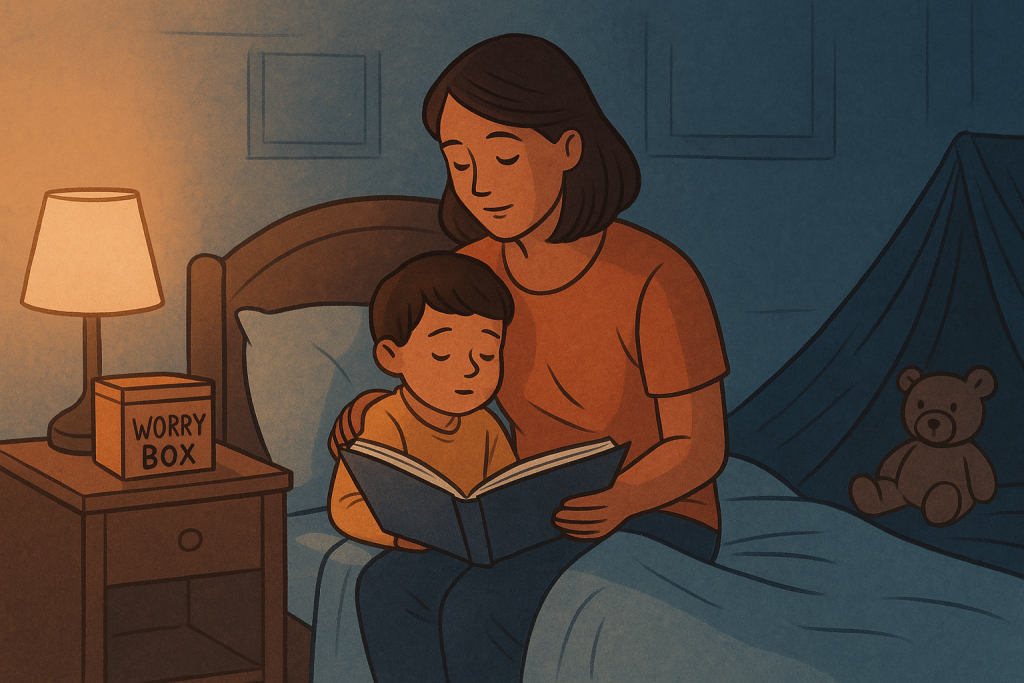
Bedtime can feel like a daily battle. Repeated questions, clinginess, or refusal to get into bed often signal worry or anxiety rather than misbehaviour. For children referred to play therapy, these struggles can reveal what’s happening inside.
- Keep a Predictable Routine
Consistency helps children feel safe. A simple routine, bath, story, cuddle, lights out is more effective than a long ritual. Predictability is key.
2. Use a “Worry Box”
Give your child a box to place drawings or notes about their worries. Externalizing anxious thoughts before bed helps them let go instead of carrying stress into the night.
3. Create a Safe Space
Small, enclosed spaces like a blanket fort, favourite toy, or special pillow provide comfort and control, helping your child regulate emotions.
4. Offer Choices
Even tiny decisions (“blue pyjamas or green?”) give children a sense of agency, reducing bedtime struggles and fostering cooperation.
5. Gentle Reflection
Instead of lecturing, reflect what you notice:
- “I see you’re worried about tomorrow.”
- “It looks like you’re really tired but still want to play.”
Validating feelings helps your child feel understood, easing transitions to sleep.
6. Celebrate the Small Wins
Progress may be subtle: shorter bedtime negotiations, calmer moods, or a willingness to talk about worries. These small victories are worth noticing and treasuring.
Bedtime struggles can be a window into your child’s world. Calm routines, safe spaces, choices, and gentle reflection help them regulate emotions while strengthening trust and connection.